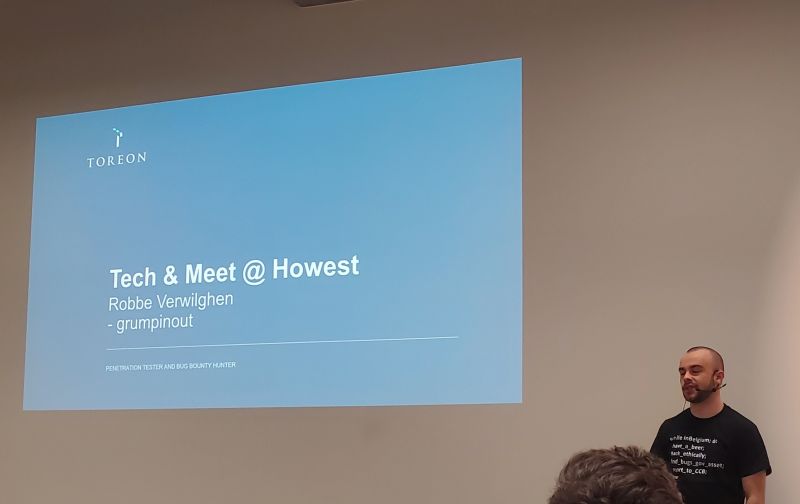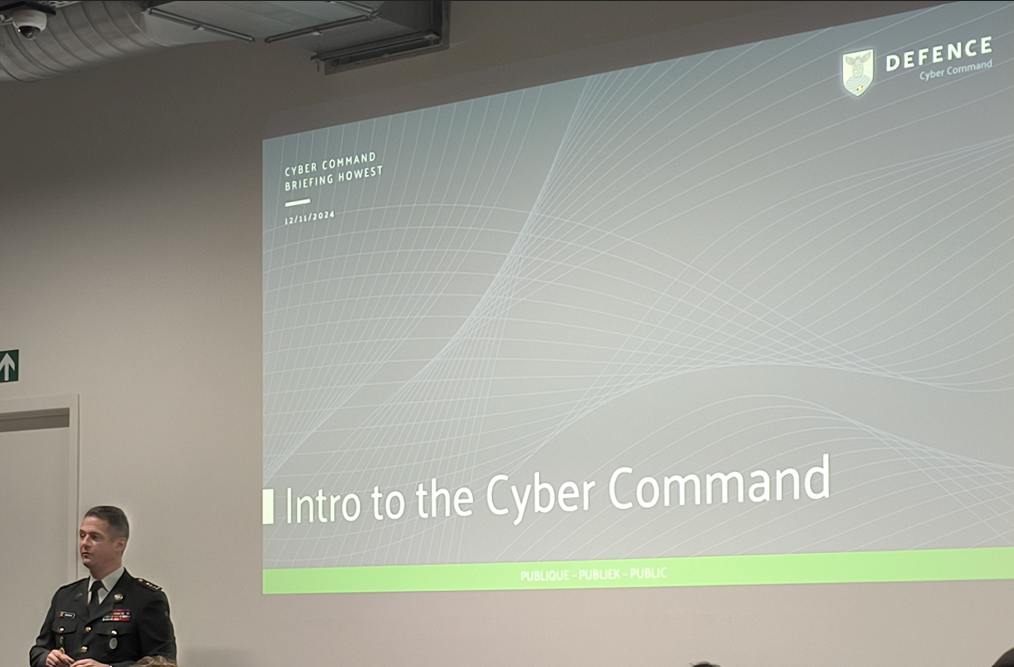
📅 Date: 12 November 2024
📍 Location: Howest BST Campus
🪖 Type: Passive Event – Guest Lecture
Earlier this month, I had the opportunity to attend a fascinating Tech & Meet session led by Colonel Godefridis, Director for Development & Readiness at the Belgian Cyber Command. This relatively new military branch, founded in October 2022, represents Belgium’s response to the rising complexity and criticality of cybersecurity in national defense.
🌐 Cyber as the Fifth Domain
Colonel Godefridis opened by framing cyberspace as the fifth operational domain, standing alongside land, air, sea, and the recently recognized medical domain. What stood out was the strategic importance of cyber readiness in both domestic incidents and international military operations.
He explained cyberspace as being made up of three intertwined layers:
- Physical: hardware, cables, and infrastructure
- Logical: protocols, software, and systems
- Social: human behavior, online presence, and influence
This perspective highlights that defending cyberspace isn’t just about technology—it’s about managing complexity across systems, people, and networks.
🧠 Protect, Collect, Defend, Fight
The Cyber Command operates under the SGRS, Belgium’s General Intelligence and Security Service, and follows a structured operational framework:
- Protect critical systems
- Collect intelligence data
- Defend against intrusions and threats
- Fight in the digital arena when required
They collaborate with NATO allies and international organizations to ensure real-time preparedness. One example shared was “Locked Shields,” a large-scale NATO cyber exercise where military, civil, and academic experts simulate defending against a massive cyberattack.
🔐 Legal Authority & Cyber Ethics
A surprising element of the session was learning that Cyber Command can, under legal authority, access the mobile devices of suspects without prior approval—something that sparked ethical debates about privacy vs. national security. It raised important questions about how legal frameworks evolve alongside technological capabilities.
🧩 Joining Cyber Command
To join Cyber Command, candidates must pass a full security clearance, which involves not only reviewing personal activity but also that of close connections and housemates. This level of scrutiny reflects the sensitivity of the data and infrastructure involved.
For those not pursuing a traditional military path, there are options to contribute as a reservist, civilian expert, or through Cyber Defense Factories, where students collaborate on innovation-focused defense projects.
🧠 Reflections
One key message stood out: in cybersecurity, learning never stops. You need both deep expertise and the ability to think creatively. It’s not enough to just think outside the box—you have to master what’s inside it too.
💡 Final Thoughts
This wasn’t just another cybersecurity lecture. It was a rare look into how a nation defends itself in the digital realm, blending technical rigor, legal complexity, and strategic coordination. The mindset required to succeed in this field—resilience, curiosity, and ethical responsibility—is one I aspire to cultivate as I continue my path in tech.